


Why First-Time Donors Don’t Give Again (And How to Fix It Digitally)

If you’re a nonprofit leader, development director, digital fundraising manager, or marketing strategist, you’ve probably felt this: you run a campaign, you bring in a wave of first-time donors… and then the list goes quiet.
Not because your donors stopped caring — but because the relationship never really got built.
Here’s the transparent truth: most organizations are designed to win the first gift, not the second. And the second gift is where sustainability starts.
Let’s break down why first-time donors don’t give again, and exactly how to fix it with a practical nonprofit digital strategy focused on donor retention.

Key Takeaways
New donor retention is often around “one in five” — meaning ~80% of first-time donors don’t return.
Some FEP reporting shows new donor retention as low as ~14% in certain periods — a major sustainability red flag.
Retention is not primarily a fundraising problem — it’s a donor journey design and digital experience problem.
The best immediate lever: a 30–90 day first-time donor onboarding strategy (not “add them to the newsletter”).
Monthly giving is a major stabilizer: monthly giving accounted for 31% of all online revenue in 2024 in the M+R Benchmarks dataset.
Consistent, intentional communication can materially change results; one NextAfter test showed +41.5% revenue with more consistent donor communication.
Your thank-you page and first 7 days post-gift are high-leverage conversion moments — treat them like premium onboarding.
Table of Contents
The Hidden Revenue Leak: First-Time Donor Retention
The Data Reality: What’s Actually Happening
Why First-Time Donors Don’t Give Again (The 5 Root Causes)
How to Fix It Digitally (A Practical Playbook)
Turning First-Time Donors into Monthly Donors
What to Measure: KPIs That Predict Repeat Giving
30/60/90 Implementation Roadmap for Busy Teams
Conclusion: Make the Second Gift Inevitable
👉The Hidden Revenue Leak: First-Time Donor Retention
In most sectors, if a business lost 75–85% of newly acquired customers within a year, leadership would treat it as urgent.
In nonprofits, we often shrug and say, “Retention is hard.”
Retention is hard — but it’s also highly fixable, especially digitally.
Because what first-time donors need is not complicated:
reassurance their gift mattered
a clear story they can emotionally hold onto
proof the organization is trustworthy and effective
a sense that they belong here
an easy, relevant next step
What most nonprofits deliver instead:
a receipt
an inbox that goes silent or becomes transactional
the next appeal arriving before any relationship was built
That isn’t donor disloyalty.
That’s donor experience debt.
📊The Data Reality: What’s Actually Happening
The Fundraising Effectiveness Project (FEP) has repeatedly highlighted the struggle to retain new donors. In the Q4 2024 benchmark reporting, FEP noted that “one in five” donors who were new in 2023 gave again in 2024 — a straightforward way to say new donor retention is roughly 20%.
More recent reporting has continued to signal weakness, including new donor retention around 14% in certain time windows.
At the same time, overall giving can rise even while donor counts fall — a sector-wide warning sign because it implies growing reliance on fewer (often larger) gifts. For example, Giving USA has reported total U.S. charitable giving reaching $592.5B in 2024 with inflation-adjusted growth, while sector commentary has raised sustainability concerns tied to donor participation trends.
On the digital side, M+R Benchmarks data shows how important recurring revenue has become: monthly giving accounted for 31% of all online revenue in 2024.
So the strategic context is this:
acquisition is harder and more expensive
donor participation is volatile
retention is the stabilizer
monthly giving is increasingly central to online fundraising
❓Why First-Time Donors Don’t Give Again (The 5 Root Causes)

Below are the five most common causes — framed in plain language, and translated into digital fundraising strategy actions.
Cause #1: No Immediate Emotional Reinforcement
The donor’s emotional “peak moment” is right after they give.
And that’s when most nonprofits do the least.
If your thank-you page is generic and your confirmation email reads like a transaction, you’re telling the donor:
“This was a payment, not a relationship.”
What first-time donors actually need right away:
“You did something meaningful.”
“Here’s the impact your gift makes.”
“Here’s the story you’re now part of.”
Digital fix: Treat the thank-you page like the first page of an onboarding journey, not a receipt.
Cause #2: No Structured Follow-Up Journey
Most nonprofits don’t have a real first-time donor onboarding strategy. They have:
a donation confirmation email
a newsletter list
a future appeal calendar
That’s not onboarding — it’s a broadcasting schedule.
A first-time donor should receive a first-time donor retention sequence designed to move them from:
Stranger → First Gift → Trust → Identity (“I’m a supporter”) → Second Gift
Without a journey, donors don’t know what happens next — so nothing happens.
Cause #3: Over-Solicitation, Under-Relationship
If the next thing a donor hears from you is another ask (especially a big one), it can feel like:
“They only want my money.”
Even when you do need the money (and you do), perception matters.
The relationship has to earn the next ask.
Digital fix: Build a short “value runway” before the next solicitation:
story
transparency
impact feedback
engagement option
then ask
Cause #4: Poor Digital UX (Trust + Friction)
Common donor experience issues that quietly kill retention:
donation form too long
mobile experience clunky
no modern payment options
unclear privacy/trust cues
confusing navigation after the gift
no easy way to update preferences or choose content topics
When donors experience friction, they don’t just abandon that session — they remember it.
And when the next appeal arrives, their brain recalls:
“That was annoying.”
Digital fix: UX is stewardship. Convenience is care.
Cause #5: No Clear Impact Feedback Loop
Donors repeat behaviors that feel meaningful.
If your communications don’t answer:
“Did my gift matter?”
“What changed?”
“What’s the progress?”
“Why am I still needed?”
…then the first gift becomes a closed chapter, not the beginning of a story.
This is why impact storytelling isn’t fluff — it’s retention infrastructure.
🎯How to Fix It Digitally (A Practical Playbook)
Let’s get tactical. Below is a model you can implement even with a small team.
4.1 The 30-Day First-Time Donor Onboarding Framework
Here’s a practical first-time donor onboarding strategy you can copy.
Day | Goal | Message Theme | "Natural" Keyword Use |
0 | Reinforce meaning | "You made this possible" + impact snapshot | first-time donor retention, donor onboarding strategy |
3 | Build emotion | beneficiary story / human narrative | donor retention strategies |
7 | Build trust | transparency: where funds go, how programs work | nonprofit digital strategy |
14 | Invite identity | "You're part of this" + community proof | increase repeat donations |
21 | Create engagement | reply-to email, survey, behind-the-scenes video | donor retention strategies |
30-45 | Earn the second gift | contextual renewal ask tied to impact progress | first-time donor retention, increase repeat donations |
One important tone note:
When your first-time donor emails sound like a human wrote them, people respond differently.
NextAfter’s research has repeatedly emphasized human-centric communication styles, and one test referenced major performance lifts when communications feel authentic and relational.
Sample “Day 0” thank-you email (structure)
Subject: “You just changed something today”
2–3 sentences: gratitude + emotional reinforcement
1 short story line: “Here’s who you helped”
1 proof point: a metric or simple outcome
1 next step: “Want to see how this unfolds?” (link)
4.2 Thank-You Page Optimization (Your Underused Powerhouse)
Your thank-you page is one of the highest-leverage digital locations in your entire ecosystem.
A good thank-you page should include:
Impact translation: “Your $50 helps provide…”
Story snippet: 3–5 lines, one person, one moment
Visual reinforcement: photo or short video
Trust cues: privacy + mission credibility
Next-step menu: pick one action (not five)
Soft monthly giving option: framed as “join” not “upgrade”
Recommended thank-you page wireframe (simple)
Headline: “You did something real today.”
Impact block: “Here’s what your gift makes possible.”
Story card: “Meet [Name]…”
Next step: “Follow the journey” (email series opt-in)
Optional: “Join our monthly community” (explained, not pushed)
4.3 Segmentation: Stop Treating New Donors Like Everyone
Segmentation is one of the most practical donor retention strategies because it reduces irrelevance.
At minimum, segment first-time donors by:
acquisition source (event / social / email / peer-to-peer)
campaign type (emergency vs program vs general)
gift size tiers
geography (if relevant to programs)
“interest” tag (ask via a 1-click survey)
1-click survey prompt (email)
“Quick question so we send the right updates — what moved you to give?”
Helping families
Youth / education
Emergency response
Community health
Other (reply)
This makes your nonprofit digital strategy feel personalized without needing heavy tech.
4.4 Build a 90-Day Impact Narrative Calendar
Instead of random updates, build a narrative arc:
Month 1: Orientation
the problem you solve
who you serve
what makes your approach effective
Month 2: Proof
story + measurable progress
“here’s what your support unlocked”
Month 3: Belonging
community identity
insider update
volunteer or advocacy action
then renewal ask
This is how you increase repeat donations without feeling salesy — because donors understand the story they’re joining.
4.5 Behavioral Triggers (The “Digital Maturity” Multiplier)
Behavioral automation is where donor onboarding strategy becomes scalable.
Examples you can implement in most CRMs/email platforms:
If donor clicks “impact story” link twice → send a deeper program story.
If donor watches video → send a behind-the-scenes note.
If donor doesn’t open 3 emails → send a re-engagement story with a new subject line.
If donor visits monthly giving page but doesn’t convert → send a “why monthly matters” email 2 days later.
Why this works: it respects attention and intent. It’s what modern nonprofit digital strategy looks like.
4.6 Communication Frequency (Yes, You Can Send More)
Many teams fear “sending too many emails.”
But the bigger danger is disappearing.
NextAfter has documented a test where more consistent communication produced a 41.5% increase in revenue — not because donors love spam, but because consistency builds familiarity and trust.
Practical takeaway:
don’t blast everyone more often
communicate more consistently with engaged segments
keep the tone human and the content valuable
💪Turning First-Time Donors into Monthly Donors
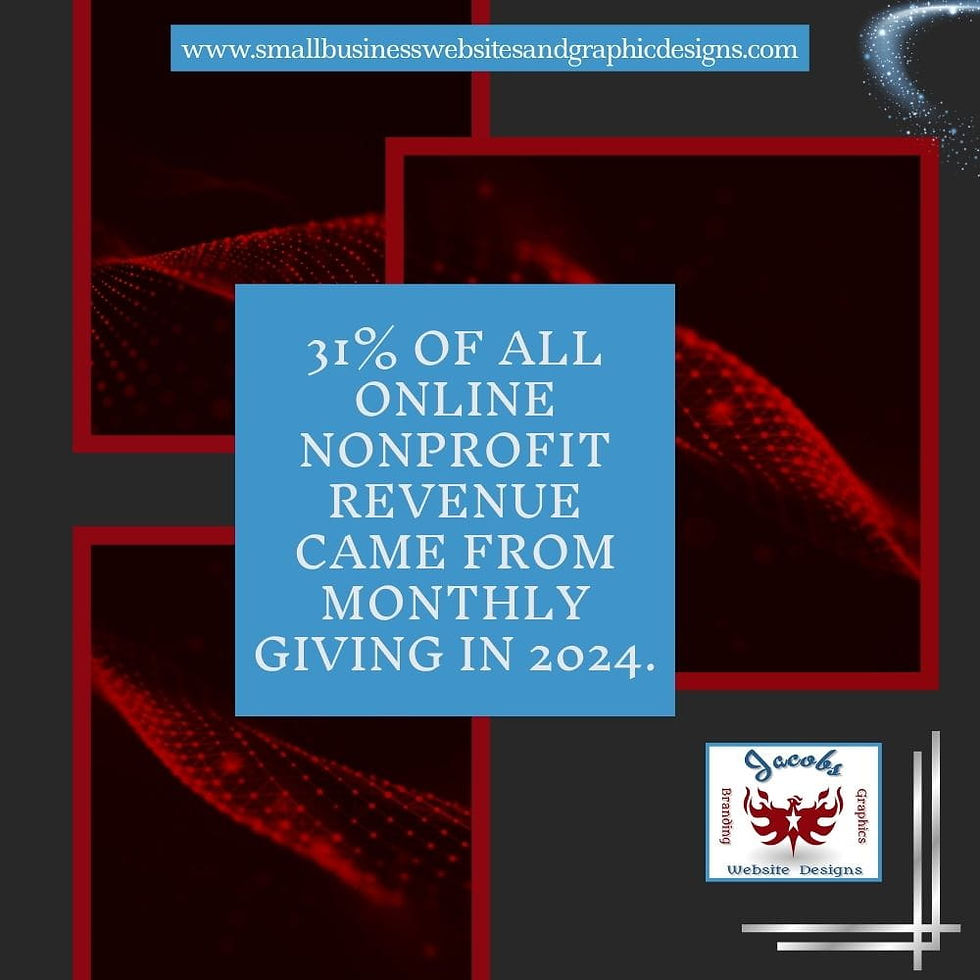
Monthly giving is not just a revenue tactic — it’s a retention strategy.
M+R Benchmarks data shows monthly giving represented 31% of online revenue in 2024, reinforcing how central it has become to digital fundraising performance.
When to introduce monthly giving
Not instantly as a pop-up upsell.
Better sequence:
thank them
show impact
show ongoing need
invite them to join a monthly community
How to frame it (copy pattern)
Instead of: “Make it monthly.”
Try: “Join the people who make this possible every month.”
Monthly giving message ingredients
identity: “monthly community”
predictability: “ensures families aren’t left waiting”
outcome: “supports X each month”
gratitude: “you’re the backbone”
⚖What to Measure: KPIs That Predict Repeat Giving
If you want first-time donor retention to improve, measure what predicts it.
Core KPIs (Retention Dashboard)
KPI | Why it matters | What "good" looks like |
30/60/90-day retention | early indicator of long-term loyalty | trending up, not perfect |
Second gift rate | direct measure of your goal | improves with onboarding |
Time to second gift | tells you if journey pacing works | decreases over time |
Email open/click by segment | indicates relevance | higher for onboarding series |
Monthly conversion rate | stabilizes revenue + retention | gradual lift over quarters |
Donation page completion rate | friction proxy | improves after UX work |
Also track:
% of first-time donors who consume impact content
% who update preferences / choose interests
% who respond to a “reply-to” email
Those are leading indicators of relationship.
📘30/60/90 Implementation Roadmap for Busy Teams
If your team is already stretched, use this phased approach.
Days 1–30: Fix the First Week
Rewrite thank-you page (impact + story + next step)
Create a Day 0 / Day 3 / Day 10 onboarding email mini-series
Add first-time donor tagging in CRM
Audit donation form friction (mobile + fields + clarity)
Days 31–60: Add Segmentation + Narrative
Add campaign-source segmentation
Build a simple 90-day story calendar
Add a 1-click interest survey
Create a monthly giving invitation email (soft, identity-based)
Days 61–90: Add Automation + Testing
Add 2–3 behavioral triggers
A/B test subject lines for onboarding emails
Test thank-you page variants (impact block vs story block first)
Build a basic retention dashboard review cadence (monthly)
🌟Conclusion: Make the Second Gift Inevitable

First-time donor retention doesn’t fail because donors are fickle.
It fails because most nonprofits unintentionally treat the first gift as the finish line.
If you want to increase repeat donations, you need to engineer what happens next:
a meaningful thank-you experience
a structured donor onboarding strategy
segmentation that keeps messages relevant
a 90-day narrative that builds identity
an impact feedback loop that closes the story
automation that responds to real behavior
an invitation into monthly giving that feels like belonging
And here’s the most transparent part:
You don’t need a massive team or enterprise tools to do this well.
You need intentional design.
The second gift shouldn’t be luck.
It should be the natural next step of a great digital experience.
💡Summary
FEP benchmarking highlights that new donor retention can be as low as “one in five” (and in some reporting windows even lower), making first-time donor retention one of the biggest sustainability challenges in fundraising.
This post broke down the five biggest drivers of donor drop-off — weak emotional reinforcement, missing onboarding, transactional follow-up, digital UX friction, and lack of impact feedback — and provided a practical nonprofit digital strategy to fix them.
Key solutions include a 30–90 day onboarding journey, thank-you page optimization, segmentation, impact narrative planning, and behavioral automation — plus a monthly giving pathway aligned with modern online fundraising trends.
And if you’re looking at all of this thinking, “We don’t have the time or in-house skills to make these changes,” that’s where I come in. I help nonprofits and small businesses design and refine websites, donation pages, and social media marketing campaign graphics so that digital generosity isn’t blocked by bad mobile UX. In addition, I offer a visual brand identity service to make sure your branding is consistent across platforms. Reach out to me for more details, book a FREE 1 hour consult or fill out my new project form to get started.
✨FAQs
What is a “good” first-time donor retention rate?
Many organizations see first-time retention around ~20% (roughly one in five), and some sector reporting shows even lower in certain periods.
How soon should we ask a first-time donor to give again?
Typically 30–45 days is a strong window if you’ve delivered impact and trust-building communications first. For emergency campaigns, the timing can be sooner — but still needs relationship context.
What’s the fastest digital change that improves donor retention?
A redesigned thank-you page plus a simple Day 0 / Day 3 / Day 10 onboarding sequence. That single change improves relevance, trust, and engagement quickly.
Does monthly giving really help retention?
Yes — and it’s increasingly central to online fundraising. M+R Benchmarks data indicates monthly giving made up 31% of online revenue in 2024 in their dataset.
How much should we email new donors without annoying them?
The real risk is silence. NextAfter has reported tests where more consistent communication increased revenue materially, suggesting consistency can improve outcomes when done with relevance and authenticity.


Comments